




.
.
Sepideh Takshi: After the Archive, the Body Speaks introduces the practice of Iranian artist Sepideh Takshi, based in the United Kingdom, whose work examines the relations between archive, technology, censorship, and memory. Bringing together video works, digital environments, and algorithmic processes, the exhibition is grounded in the idea that technological systems are never neutral: they classify, filter, distort, and condition what can be seen, recognised, and preserved. The exhibition seeks to make legible how the artist confronts these mechanisms through a practice that displaces the archive from its appearance of stability and repositions it as a site of dispute, while treating the body as a locus of exposure, control, and resistance.
The exhibition is organised around three axes. The first examines the rewriting of archives and the disputes surrounding documentary authority; the second turns to bodies subjected to algorithmic censorship and to contemporary forms of distorted visibility; the third considers counter-uses of the algorithm, opening space for other narratives and forms of circulation. The exhibition derives directly from the curatorial project Decolonial Atlas: Mapping Artists that Challenge Digital Colonialism, extending into the format of a digital solo exhibition a set of questions central to that mapping: how digital infrastructures reproduce hierarchies of power, and how artistic practices can confront them, strain them, and reinscribe other ways of seeing, remembering, and narrating.
Contested Archives: Technology, Failure, and Authority
In Sepideh Takshi’s research, the archive ceases to be understood as an inert repository of the past, revealing itself instead as an active space of contestation over memory, authority, and power. Through the use of artificial intelligence and digital systems, the artist exposes technology as a mechanism that frequently perpetuates and automates colonial classifications, far from the idea of a neutral preservation tool. This infrastructure exacerbates the biases responsible for excluding marginalized subjects from official history. Instead of using the virtual medium to create perfect replicas or crystallize documents, Takshi subverts the system by integrating technical failure and algorithmic noise—the glitch—as forms of resistance. In doing so, she fractures the supposed infallibility of machines and highlights the direct role of contemporary technological infrastructure in the politics of visibility. Her practice reveals that technology ultimately dictates what survives time and who holds the right to narrate and be remembered.
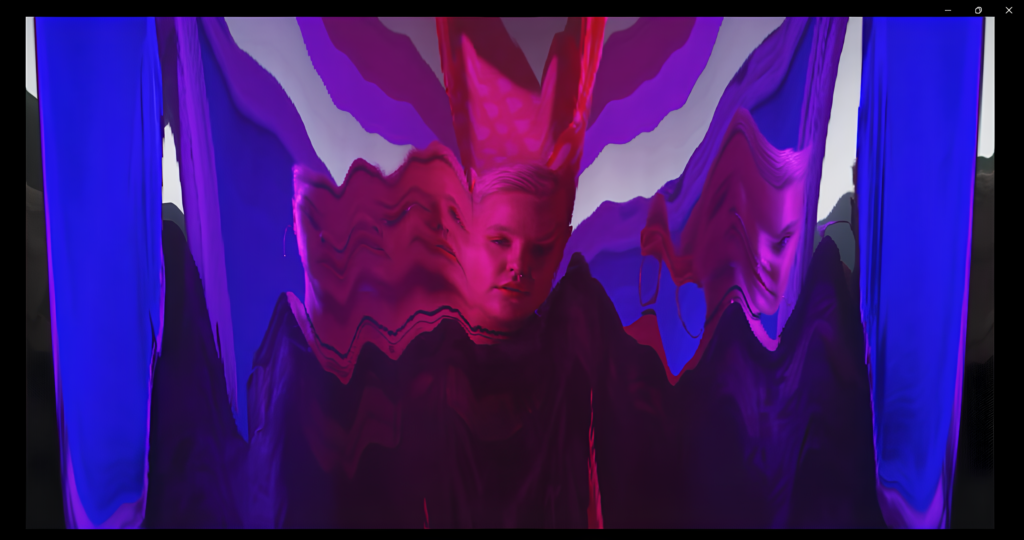
The Glitch as Decolonial Gesture (2025)
The Unstable Body: Algorithmic Misreading and Political Erasure
This debate extends from the archive to the politically exposed body. Through the manipulation of biometric data and three-dimensional scans, the artist demonstrates how technical systems distort and misread the human face. The marginalized body, particularly the Middle Eastern female body, ceases to be exclusively a target of social control to become an object of algorithmic error. The machine’s failure articulates the very logic of exclusion, transforming visual absence and data fragmentation into indices of structural violence. This process exposes the transition from direct political censorship to a technically mediated one, where the refusal to stabilize the body as a consumable image acts as a powerful gesture of resistance.
.
Decolonizing Censorship: Khodanour (2026)
Decolonizing Censorship (2026)
After Control: Polyphony, AI, and Collective Narratives
To prevent the critique from ending solely in denunciation, the artist actively subverts dominant algorithmic logic to construct alternative forms of circulation, memory, and creation. Transforming historical narrative traditions into global, participatory archives, she reinscribes ancestral storytelling as a contemporary tool for survival, agency, and polyphony. The digital realm is thus reimagined as a fertile space for decolonization and the emergence of multiple voices. Furthermore, this approach directly challenges the demand for technical purity by treating algorithmic residue and digital decomposition—often discarded as digital waste—as vital matter for regeneration. These counter-uses of artificial intelligence demonstrate that systems originally designed to control and categorize can be powerfully repurposed to nurture collective memory and continuous cultural renewal.
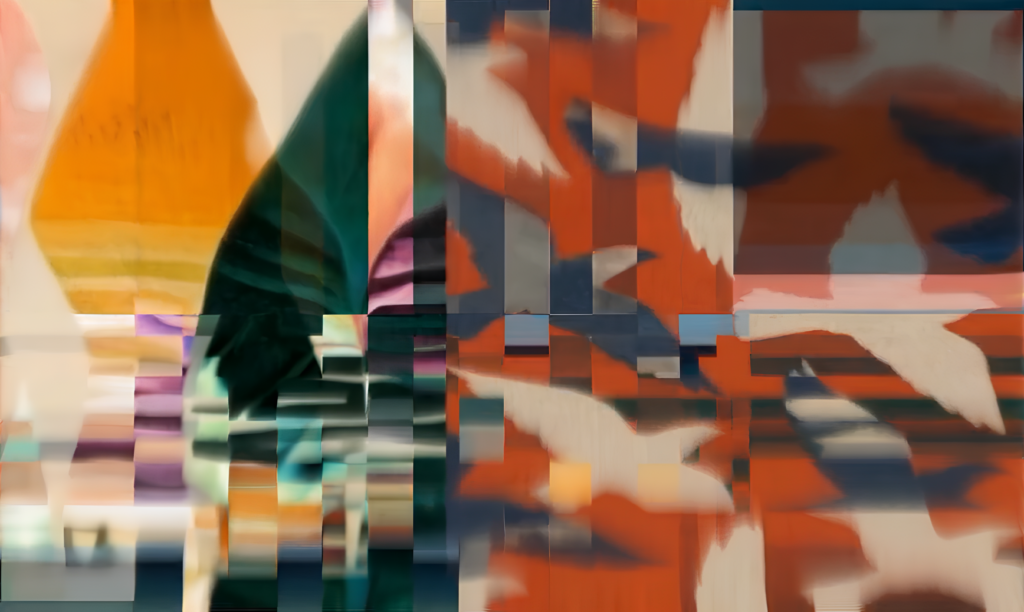
Compost (2025)
.
.
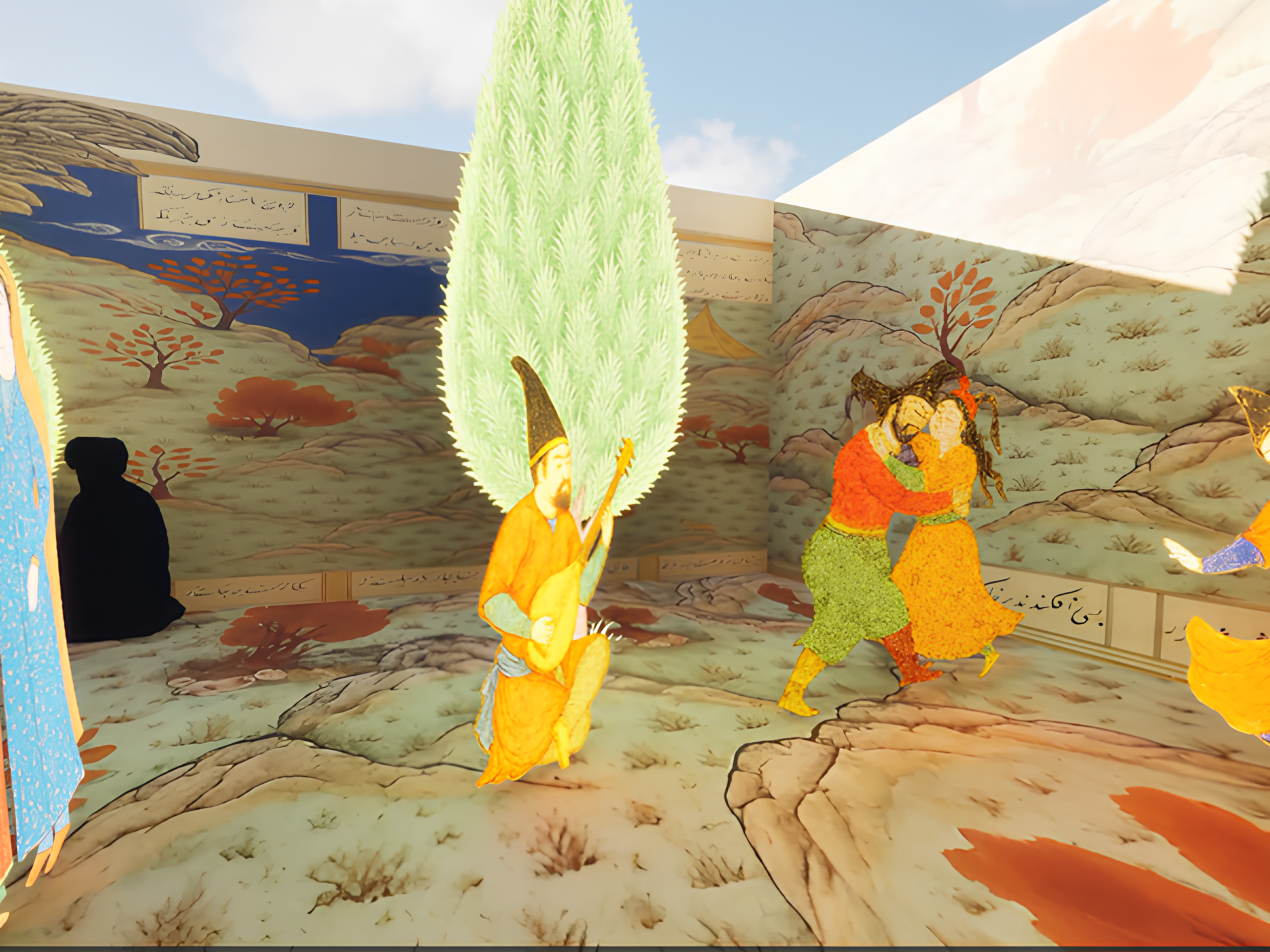
Echoes of a Decolonized Archive 1 (2025)
.
Echoes of a Decolonized Archive 2 (2025)
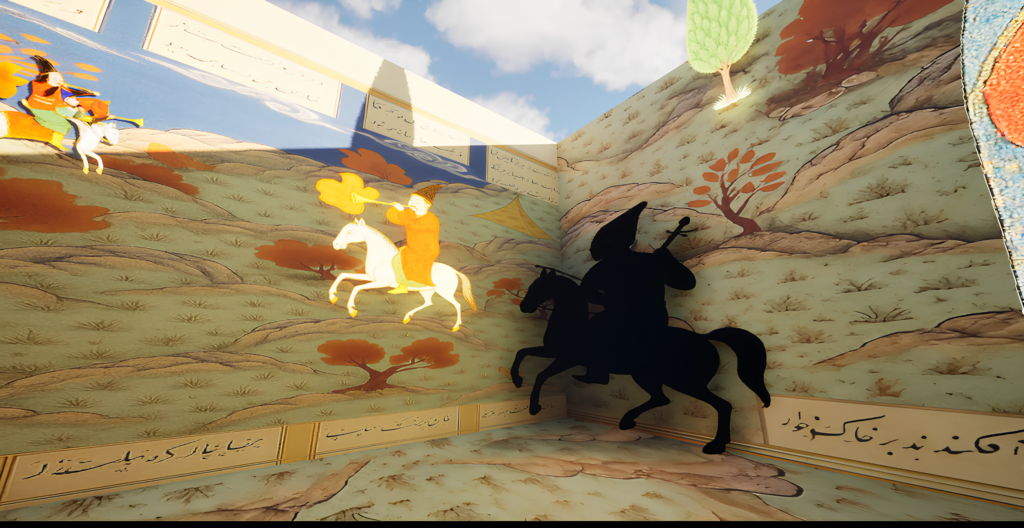

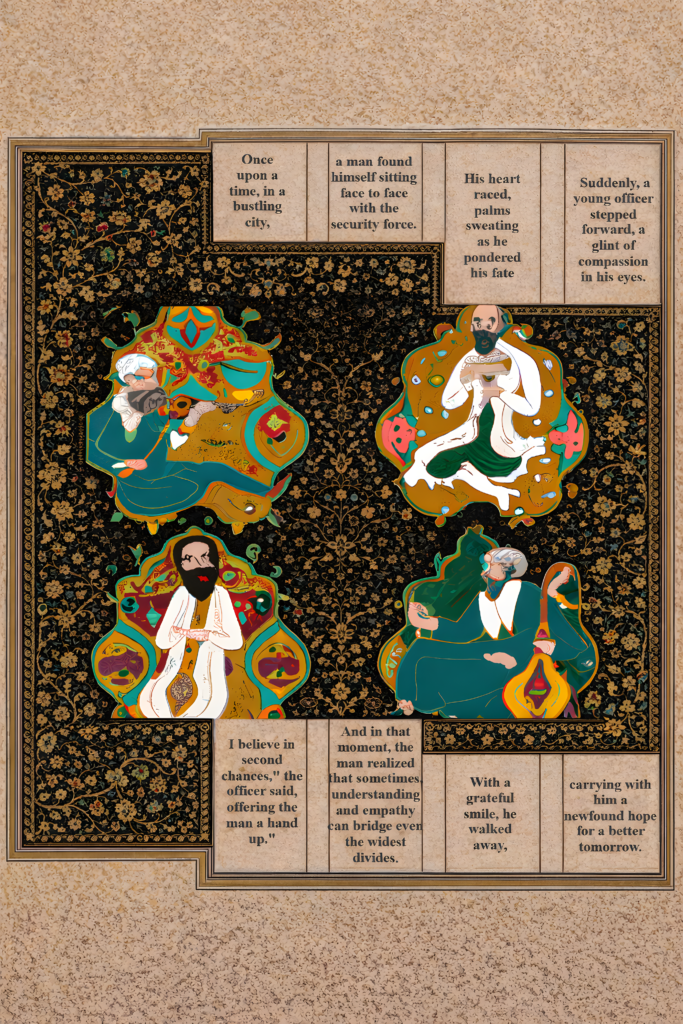
One Thousand and One Nights is a participatory platform that transforms the narrative tradition associated with the classical collection into an open digital environment shaped by user intervention. Through the selection of emojis and a thematic prompt, each participant activates a generative process that produces a unique story accompanied by images inspired by Persian miniature painting, shifting the work from a fixed literary form to a living, collective archive in continuous transformation. By mobilising the figure of Scheherazade as a paradigm of storytelling, survival, and transformation, the project reflects on authorship, memory, and identity within an algorithmic context: artificial intelligence no longer appears as a mere tool, but operates as a mediating instance that translates and refracts user input, so that each narrative emerges as an unstable double between individual imagination, cultural inheritance, and technical processing.